How Mobile Apps Influence Traffic to Shopify Stores
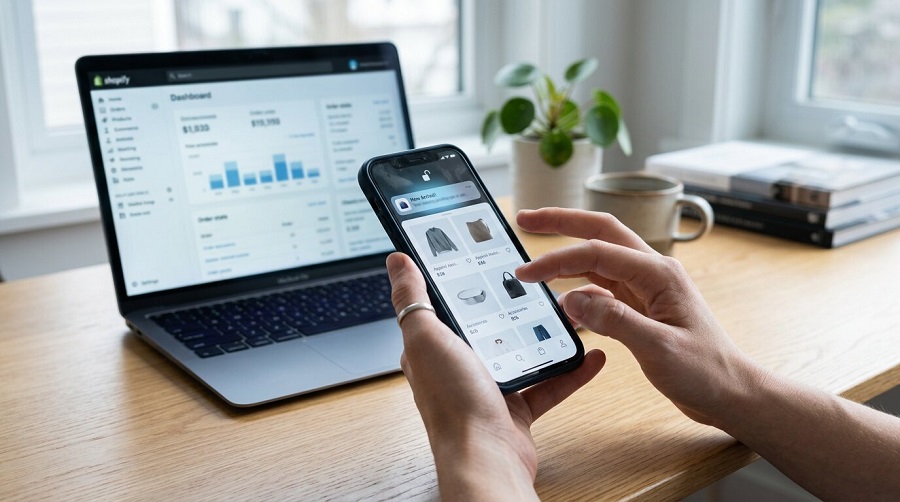
When you launch a mobile app for your Shopify store, you don’t just add another sales channel. You change how shoppers discover, browse, and return to your brand. With faster load times, home-screen access, and built-in payment options, customers move from browsing to checkout with far less friction. Add push notifications, deep links, and tailored offers, and your app can quietly become the main driver of traffic you’re currently missing out on…
How a Shopify Mobile App Drives More Traffic
A Shopify mobile app does more than offer convenience. It reshapes how often and how easily customers return to your store. With a dedicated app installed on their device, shoppers are just a tap away from browsing, which naturally leads to more frequent visits and longer engagement compared to mobile web sessions. Over time, this consistent interaction builds familiarity and increases the likelihood of repeat purchases.
What makes this approach especially effective is how it removes friction. Faster load times, smoother navigation, and saved preferences create a more seamless experience, allowing users to move from discovery to checkout without the small delays that often cause drop-offs on mobile browsers. These improvements may seem subtle, but they compound into noticeably stronger conversion performance.
This is where getting Shopify app development services becomes a strategic advantage. Teams that understand your market, such as local shopping habits, preferred payment methods, and mobile usage trends, can design app features that feel tailored rather than generic. For example, in mobile-first regions, a well-built app might prioritize lightweight performance, localized payment integrations, and personalized home screens to keep users coming back.
Push notifications then extend that experience beyond the app itself. Timely alerts about restocks, limited-time offers, or price changes can bring users back almost instantly, often outperforming traditional email campaigns in both visibility and response rates. When combined with a thoughtfully developed app, these touchpoints turn casual visitors into repeat customers and steadily increase overall traffic.
Is a Shopify Mobile App Worth It for Your Store?
Deciding whether a Shopify mobile app is worthwhile should be based on data rather than assumptions.
Begin by reviewing your mobile analytics: if a significant share of traffic comes from mobile devices but mobile conversion rates lag behind desktop rates, a dedicated app may help close that gap. Some brands, such as Naked Harvest, report more than double the conversion rate in their app compared with their mobile website.
It is also important to evaluate customer acquisition cost (CAC) and retention. A mobile app can improve retention by giving you more direct control over communication through push notifications, in-app personalization, and integrated loyalty features, thereby supporting higher customer lifetime value (LTV) and better marketing efficiency.
However, if your current mobile performance is weak due to basic usability or speed issues, it's usually more effective to optimize your mobile theme first.
In some cases, implementing a progressive web app (PWA) can provide app-like benefits at a lower cost and complexity than developing and maintaining a fully native Shopify app.
How a Shopify App Boosts Engagement and Repeat Visits
A Shopify mobile app can increase how often customers return and how long they stay active. Data indicate that app users are about twice as likely to return within 30 days as mobile web shoppers, which can contribute to higher customer lifetime value.
Push notifications typically generate higher engagement than email, with click-through rates up to 7x higher in some cases. They're also about 125% more likely to lead to a purchase, directing users directly to product or checkout pages.
Within the app environment, shoppers often spend more time browsing and tend to convert at higher rates. For example, Naked Harvest reported a 142% higher conversion rate from app users, suggesting that instant, personalized, and promotion-focused in‑app experiences can support more frequent and more valuable visits.
Mobile App Features That Turn Shoppers Into Buyers
As engagement and repeat visits increase, the next step is converting that attention into revenue. In many cases, specific mobile app features can support this goal more effectively than a standard Shopify storefront.
Reducing friction and tailoring each session to the individual user are key factors in turning shoppers into buyers. Studies indicate that faster, more personalized mobile app experiences can lead to substantially higher conversion rates compared to mobile web, in some cases exceeding a 100% improvement. Push notifications with targeted offers can also drive direct revenue, often showing significantly higher click-through rates than email and a greater likelihood of purchase following engagement.
Built-in payment options such as Apple Pay, Google Pay, and Shop Pay can reduce cart abandonment by simplifying checkout and minimizing the steps required to complete a purchase. In addition, features like personalized product recommendations and augmented reality (AR) product views are associated with higher engagement and can contribute to increases in both conversion rates and average order value.
How to Measure Your Shopify App’s Traffic and Sales Impact
Getting a clear view of your app’s impact starts with isolating app-driven activity from other traffic in your Shopify store. Tag all app links and deep links with consistent UTM parameters (for example, utm_source=mobile_app, utm_medium=push) to distinguish app traffic from web traffic in analytics tools such as Google Analytics or GA4.
Then, measure conversion lift by comparing app-originated mobile sessions with your baseline mobile web conversion rate (often around 1.5%, though this varies by store and industry). Connect push notification opens, in-app events, and deep-linked checkouts to Shopify orders to calculate revenue per session and customer lifetime value (LTV).
Finally, run cohort analyses to understand behavior over time. Track metrics such as 30-day return rate, repeat order rate, push click-through rate (CTR), session depth (e.g., pages or screens per session), and cart metrics (such as add-to-cart rate and cart completion rate). These measures together provide a structured view of how the app influences traffic quality and sales performance.
Conclusion
When you launch a Shopify mobile app, you don’t just add another sales channel. You create a faster, easier path for shoppers to reach you. With push notifications, deep links, and on-the-go access, you’ll pull customers back more often and keep them browsing longer. Combine frictionless checkout, personalization, and data-driven tweaks, and your app becomes a growth engine that turns casual visitors into loyal, high-value customers who repeatedly choose your store over competitors.
 Print Version
 Recommend this site!